Showing posts with label Top Category. Show all posts

Saturday, 10 September 2016

तथ्य 2500 साल पुरानी मीनाक्षी मंदिर जो मदुरै में स्थित के बारे में

मदुरै में श्री मीनाक्षी मंदिर दक्षिण भारत में सबसे अच्छा मंदिर है और, एक परिणाम के रूप में, यह स्थानों दक्षिण भारत में यात्रा करने के लिए हर किसी की सूची पर बनाता है। साथ ही मीनाक्षी मंदिर मदुरै के बारे में दिलचस्प तथ्यों के लिए इस पोस्ट को पढ़ने सभी महत्वपूर्ण जानकारी आप इस शानदार आकर्षण के लिए अपनी यात्रा की योजना बनाने की आवश्यकता होगी के रूप में.
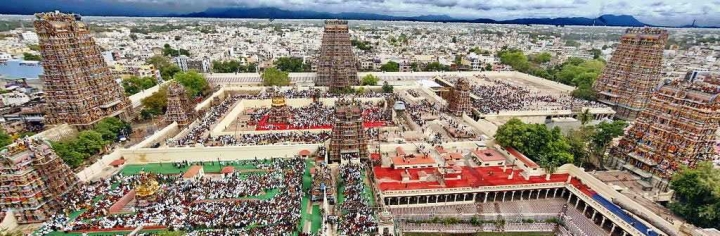
श्री मीनाक्षी मंदिर दक्षिण भारतीय विजयनगर मंदिर वास्तुकला की ऊंचाई माना जाता है


वास्तव में, मंदिर दक्षिण भारत के सौंदर्य विरासत के रूप में महत्वपूर्ण है के रूप में ताजमहल उत्तर भारत के लिए है

मंदिर 15,000 आगंतुकों को एक दिन और करीब 25,000 शुक्रवार को आकर्षित करती है, और साठ लाख रुपये की वार्षिक राजस्व प्राप्त करता है (~US$1 million)

वार्षिक 10 दिन की मीनाक्षी Thirukalyanam त्योहार अप्रैल और मई के दौरान मनाया जाता है और 1 लाख पर्यटकों को आकर्षित कर रहा है.


मंदिर 2500 साल पुराना माना जाता है


मंदिर दिल और मदुरै के 2,500 साल पुराने शहर की जीवन रेखा रूपों और तमिल लोगों के लिए एक महत्वपूर्ण प्रतीक है, तमिल साहित्य में प्राचीन काल से उल्लेख किया है, हालांकि वर्तमान संरचना 1623 और 1655 C के बीच बनाया गया था.


Friday, 9 September 2016

Facts your must know about Angkor Temples

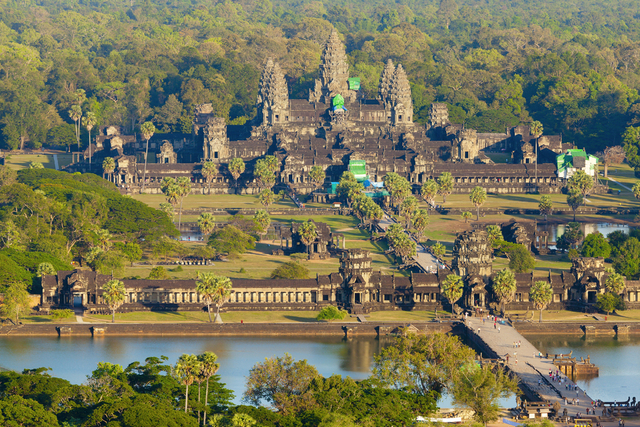
Cambodia’s famous Heritage by UNESCO – the spectacular Angkor Wat. You will not forget to wander and discover numerous monuments carved of a glorious civilization for a while.

Have you heard of religions sharing shrines? Never? Well, it happened once in Cambodia. Angkor Wat was first a Hindu religion temple and then later it was turned into a Buddhist temple. 


It is located in Cambodia and was first built by Khmer King Suryavarman II in the early 12th century in Yasodharapura, the capital of the Khmer Empire. 

It is the world's largest religious monument and one of the most visited religious sites in the world. Below are a few interesting facts that you need to know about Angkor Wat. 

  • Built at the beginning of the 12th century (between 1113 and 1150), Angkor Wat is the largest religious monument in the world.
  • Angkor Wat was driven in an erratic manner towards the west, the direction is considered as the direction of the culture of death in Hindu (Hinduism). What archaeologists and scholars disagree as to why the ancient builders to choose the direction opposite to the “standard” time.

  • The reliefs at Angkor Wat are read in the opposite direction clockwise, another sign that this temple has a relevance to funeral rites.

  • Henri Mouhot, French explorers, has helped bring power to the famous Angkor Wat in the West, by announcing the trip up to visit Angkor Wat in between his 19th century.

  • Angkor temple ruins stretching over 248 square miles (400 km2)

  • By the late 13th century, Angkor Wat is converted from Hinduism (Hinduism) to Buddhism. Today, the temple is still Buddhists use.

  • Angkor Wat sunset 200: The number of tourists to the site in the first three months of 1901, after the EFEO began clearing the site.


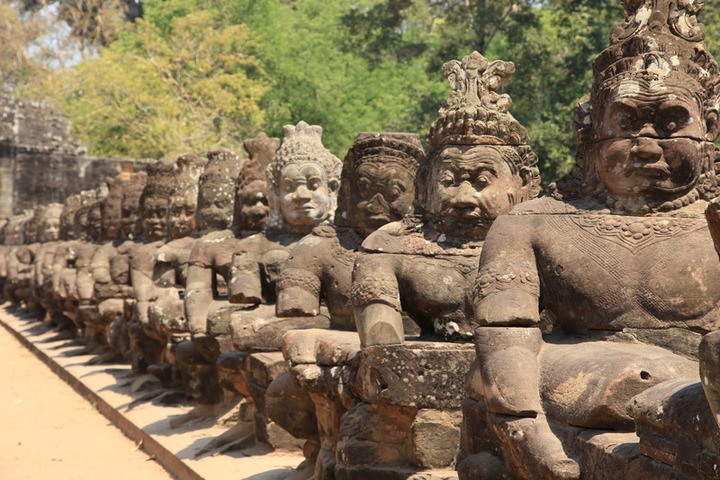
  • Naga Bridge 1 million: The reported population of Angkor City at its peak, by far the largest city in the world prior to the industrial revolution.


Facts your must know about Golden Temple

A symbol of brotherhood, equality and glory of the Sikhs, the Harmandir Sahib (Golden Temple) in Amritsar welcomes thousands of devotees from all walks of life each day.

Designed by the fifth Sikh guru, Guru Arjan Dev Ji in the late 16th century, the Golden Temple has witnessed the history unfold and stood tall for more than four centuries now.

1.Golden Temple:

The Harmandir Sahib, also Darbar Sahib and informally   referred to as the "Golden Temple", is the holiest Sikh gurdwara located in the city of Amritsar, Punjab, India. The city was founded in 1574 by the fourth Sikh guru, Guru Ram Das.

2. Foundation Of The Golden Temple Was Laid Down By A        Muslim Saint


Guru Arjan Dev, the fifth Sikh Guru in 1588 planned to build a temple in the centre in Amritsar which would be open to people of all castes, crimes and climes; thus he invited his friend and great contemporary mystic and Muslim savant, Mir Mohammed Muayyinul Islam, popularly known as Mian Mir, to lay the foundation stone of the temple. The tension between Hindus and Muslims in the 11th century was evident and the Sikh prophets desired to level down these barriers with a view to discover and provide a common spiritual ground for the two.

3. Temple Is Made Of Marble But Plated With Real Gold


The gurudwara is constructed with white marble overlaid with genuine gold leaf. In the early 19th century, 100kg of gold were applied to the inverted lotus-shaped dome and decorative marble was added to the structure.

4. Pool Surrounding The Golden Temple Is Known As Amrit Sarovar


The water surrounding the temple is a sacred pool known as the Amrit Sarovar (Pool of Nectar). The devotees who visit these shrines will bathe in these pools as Sikhs believe that spiritual and worldly benefits are gained by immersing in the holy waters of these sarovars. Legend has it that a dip in the holy water of the Sarovar surrounding the temple can cure people of many ailments. It is said that once a leper took a dip in the holy water and got cured of his leprosy.


5. Around One Lakh People Are Fed For Free Everyday


The largest langar of all gurudwaras is organised everyday at the Golden Temple, where around 100,000 people a day are fed for free by temple volunteers, but the number double during special occasions.

Facts your must know about Jagannath temple in Puri

Jagannath Puri Temple in Orissa is one of the holiest Hindu shrines in India and a part of the sacred Char Dham Yatra. It is perhaps one of the only important pilgrimage size where the main deity – the image of lord Jagannath – is worshiped in wooden idol.


Interestingly, this yatra is also the etymological origin of the English word ‘Juggernaut’. During this annual religious event, the three main temple deities are hauled on huge and elaborately decorated temple cars.

1. It it observed that the flag located at the top the temple dome always waves in the opposite direction of air flow.


2. A ritual older than many civilizations.


A priest climbs the dome of the temple which stands as tall as a 45 story building and changes the flag everyday Since 1800 years as a part of a ritual. If it is not changed any day, the temple must be shut for the next 18 years.

3.  The colossal Chakra.


The Sudarshan Chakra standing at the top of temple is 20 feet in height and weights a ton. It said to be visible from every corner of the city and it is installed in such a way that it makes you feel that it is facing toward you irrespective of the place you are in.

4. Nobody knows the technique of how the Chakra was installed.


fun fact:  The chakra was brought all way up and installed on the gopuram 2000 years ago. The engineering techniques used at that time still remain as a mystery today.

5. The Sea.


Take any place on earth, on daytime the breeze from sea comes to land and the opposite occurs in the evening but In Puri it is observed to be just the reverse.

6. Nothing flies above the temple. Absolutely nothing!


It is a surprise that nothing flies above the temple. No planes, not even birds. There is no scientific explanation for this yet.

7. The mystery of the Simhadwaram.


There is a ocean near the temple. When you’re entering the Simhadwaram (The main door) of the temple you can clearly hear sound of the ocean, now once you passed the Simhadwaram just take a turn and walk back in the same direction you came. You cannot hear the ocean until you come out of the temple.

    Facts your must know about hadimba temple

    Hadimba Temple mostly called as the Dhungiri temple in Manali is one of the most important temples in the region. This Temple of four wooden storeys is located in the middle of a forest called the Dhungiri Van Vihar. The temple derives its name from the forest parkland near the temple.

    The temple was erected in 1553 and is dedicated to Goddess Halima. Hadimba Devi Temple has a 24 m high tower and has three tiers of its square roofs are covered with timber tiles, while the conical roof is clad in metal. The unadorned walls of mud are covered with stonework in contrast with the wooden doorway, t which is elaborately decorated with miniature depictions of Goddess, attendants, animals and stylized foliation. On the beams above the doorway appears the Navagrahas, female dancers an isolated scene from the Krishna story,etc.

    1. Hadimba Devi Temple


    Also popularly known as the Dhungiri temple, Hadimba temple one of the central attractions of Manali, the world renowned tourism destination. The temple is located amidst exquisite beauties of forest parkland.

    2. The popularity of Hadimba temple


    Hadimba is one of the most popular deities of the region. People visit this temple not only to worship, but also to marvel at the incredibly superb kind of construction it features. The sanctum sanctorum consists of no images or idols, but only the footprints on a stone. The central deity Hadimba is considered the patron of the rulers and it is viewed very important to seek her blessings before their coronation. Therefore, prior to coronation ceremonies, a buffalo is sacrificed at the temple.

    3. The locals and the temple


    The locals consider Hadimba as their supreme deity. The rituals and the method of worship conducted at the temple are far different from those that happen elsewhere in other Hindu temples. The worship is rather fierce, wild and often terrifying combined with animal sacrifices. During hardships, natural calamities and problems of personal, familial and societal in nature, people visit the temple and consult the deity and pray for her favours.

    4. Hadimba was Bhima’s wife


    The demon and the brother of Hadimba who ruled over this region was a terror to all. He was subjecting his people and others to unbearable torture. Once Pandavas were passing through this region when Bhima fell in love with Hadimba. Being requested by the people of the region, Bhima killed the demon king. Then Bhima married Hadimba and stayed in the region for a year. Hadimba gave birth to a valiant son named Ghatotkachh after which Bhima left the region.

    5.Hadimba turns Goddess


    Till the time Ghatotkachh came to age Hadimba ruled over the country. Once he was ready to take charge of the country, he was made the king and Hadimba left for the Himalayas to do a severe penance. With her austere life dedicated to penance, Hadimba acquired several supernatural powers and turned a goddess. Since then it is said she is lovingly blessing and guiding the people of the region.

    6.A feast to the eyes and soul


    This is one of the representative traditional festivals of India that helps the visitors peep into the local customs, practices, rituals and culture. Chief goddesses of different villages are decorated and brought to the Hadimba temple complex. The highlights of the festival include Kullu Natti folk dance, reverberating drum sounds, an array of local dishes and the festive mood permeating the entire region.

    Facts your must know about Badrinath Temple

    India is a land of Diversities and one of the most sought after places on earth if you want to go on a pilgrimage. While there are numerous holy places spread across the country, many are famous all over the world and attract a huge number of Indigenous and foreign crowds due to their divine spiritual attraction. Badrinath Dham is one of the many holy shrines, situated in North India and has immense value in the Indian tradition and culture.


    • The doors of Badrinath and Kedarnath are going to be closed for six months for the upcoming winter season. The doors of Badrinath will be closed on 27th November and those of Kedarnath will be shut down after Diwali on 25th October. This announcement was made on Friday whilst following all the traditional rituals. Further, Madmaheshwar and Tungnath will be closed for pilgrims from 21st November and 30th November, respectively. And the respective dates of door closing ceremony of Gangotri and Yamnutri are 24th and 25th October.

    • It is said that here Lord Shiva used to meditate and he even gave some part of the Badrinath area to Lord Vishnu and went ahead to Kedarnath area.
    • Badrinath comprises of five temples in total. The five temples are known as Panch Badri. They bear a striking similarity to Kedarnath, which also has five temples and are together called as Panch Kedar.

    1. Chardham Parikrama:


    As per the Hindu tradition of parikrama, pilgrims undertake this holy journey from left to right. Pilgrimage to Chardham yatra begins from Yamunotri Temple, the westernmost shrine in the Garhwal dedicated to the Goddess Yamuna, before proceeding to Gangotri Temple which is devoted to Goddess Ganga, and then further moves to Kedarnath temple which stands as one of the 12 ‘Jyotirlingas’ of Lord Shiva and finally concludes at Badrinath temple which is devoted to Lord Vishnu.

    2. Chardham Represents Three Major Sectarians:


    The sacred sites of the Chardham in Uttarakhand are not allied to any single sect. Rather, it represents three major sectarians with the Vaisnava site at Badrinath, joined by a Saiva site at Kedarnath and two Devi sites at Yamunotri and Gangotri.

    3.Surya Kund:


    Located close to the freezing Yamunotri glacier, Surya Kund is another hot water spring which holds an important religious significance. The water of this spring is so hot that the Prasad is prepared in the water of kund only that too within just a few minutes.

    4.Gauri Kund:


    Situated at a height of 6500 feet, Gauri Kund serves as the base camp for the pilgrims on their way to Kedarnath. It comprises a temple and a hot water spring dedicated to Goddess Gauri. According to legends, Gauri Kund is a place where Goddess Gauri, wife of Lord Shiva carried out her yogic practices.

    5. Tapt Kund:  


    Located just below the Badrinath temple, Tapt Kund is the holy hot water spring where devotees take bath before visiting the Badrinath temple. The water of the kund is believed to be infused with medicinal properties. The springs of Tapt Kund are known to be the home of Lord Agni, the Hindu God of fire.

    6. Narad Kund:


    Located close to Tapta Kund, Narad kund is believed to be the recovery source of the Badrinath idol. The hot water springs comes out from under the Garur Shila and falls into a tank. Devotees visiting the Badrinath temple take a dip in this kund before heading into the temple.


    Tuesday, 6 September 2016

    Top Interesting facts about Chennai

    Chennai, the first city of Modern India in Tamil Nadu completes 375 years on August 22nd. The occasion is celebrated annually as Madras Day. On this occasion, we present some interesting facts and trivia on the South Indian city...

    Origin

    On 22 August 1639, the British East India Company under Francis Day bought a small strip of land stretching 3 miles on the Coromandel Coast. They got a license to build a fort and a castle in the contracted region.

    The ruler Damarla Chennappa Nayakudu, the Nayaka of Vandavasi, granted the British permission to build a factory and warehouse for their trading enterprises. The region was then primarily a fishing village known as "Madraspatnam".

    A year later, the British built Fort St. George, the first major British settlement in India, which became the nucleus of the growing colonial city.

    • Chennai  has the distinction of being the first British settlement.
    • The Fort Museum inside the premises of Fort St. George, managed by the Archaeological Survey of India enjoys the pride of having in its possession, the first tricolor hoisted after the Indian independence. 
    • Chennai is the first city in India to have implemented the Conditional Access System for cable television.
    • Chennai was the first Indian city to have the WI-FI facility in a widespread manner.
    • Chennai is home to the first European-style banking system in India with the establishment of the 'Madras Bank' on 21 June 1683, almost a century before the establishment of the first commercial banks, such as the Bank of Hindustan and the General Bank of India, which were established in 1770 and 1786, respectively. 
    • The Spectator, founded in 1836, was the first English newspaper in Chennai to be owned by an Indian and became the city's first daily newspaper in 1853.

    How Chennai got its name

    Different aspects explain the origin of the name Chennai/Chennapattanam:

    1. First theory explains the name that it was from the Telugu ruler Damarla Chennappa Nayakudu, Nayaka of Chandragiri and Vandavasi, father of Damarla Venkatadri Nayakudu, from whom the English acquired the town in 1639.

    2. The second theory states it was named after the Chenna Kesava Perumal Temple; the word chenni in Tamil means face, with the temple regarded as the face of the city.

    3. Historian J B Prashant More has stated that the origin of the name "Chennai" is Telugu and not Tamil.

    Chennai is the second oldest corporation in the world after London. It was started in 1687


    Other facts

    Chennai is the only city in South Asia and India to figure in the "52 places to go around the world" by The New York Times.

    It is also the fourth most populous metropolitan area in the country and 31st largest urban area in the world.

    The city is host to the third largest expatriate population in India after Mumbai and Delhi, with 35,000 in 2009 and steadily climbing to 82,790 in 2011.


    Monday, 5 September 2016

    Interesting Facts About Lima city

    Lima is the capital city of the Republic of Peru and is located in the central coastal region of the country. The city is part of an elaborate ecosystem that includes the Chillón, Lurín and Rímac Rivers. The city has a scenic view of the Pacific Ocean. Below are some facts about the city.


    1. With a population of about 9 million people within its Metropolitan area, Lima is the fifth largest city in South America.

     2. Lima is the second largest desert capital city after Cairo in Egypt. The city is located on a desert strip between the Pacific Ocean and Andes Mountains.

     3. A third of Peru's population call Lima home.


     4. Lima occupies an area measuring 2700 square kilometers and has a coastline that extends for 80 kilometers. 

    5. Lima is connected to the Peruvian highlands by a Central Highway that traverses through scenic countryside. 

    6. Lima, being a desert city never experiences proper rain. Rather, it experiences some drizzle. 

    7. For the tech-savvy tourists, there is free Wi-Fi at Parque Central de Miraflores. Note that the internet connection might be unreliable. You are better off in a per second-billing cyber cafe. 

    8. Lima is home to Peruvian gastronomy exploits. Here, you will feed like royalty at very little charges. 


    9. Lima was founded by a Spaniard conquistador called Francisco Pizarro on January 18, 1535. 

    10. Lima was called La Ciudad de los Reyes which is translated as "The City of Kings." It became the capital of Viceroy of Peru until Peru gained independence.


    Lima is one of those interesting cities that one wishes to stay forever. The weather is good, the food is awesome, the people are friendly, it has lots of fun activities to engage in and is next to the sea.


    Saturday, 3 September 2016

    Top Hottest Actresses of Bollywood 2016

    1. Priyanka Chopra


    The former Miss India and Miss World ,the actress, singer and songwriter Priyanka Chopra (PC), born on 18 July 1982, in Jamshedpur, Bihar. She made her acting debut in 2002 with the box office super hit Andaaz opposite Akshay Kumar. In 2012, her films Barfi and Agneepath were super hits, and her acting was hailed by critics. She was given the “Hottest Girl of the year” title by Maxim.

    2. Kareena Kapoor


    Born into a film family in Mumbai on 21 September 1980, She made her Bollywood debut in 2000 war drama Refugee. She mostly in the list of the top ten actress. In 2012 she married to B’wood star Saif Ali Khan, and gave 2 major hits. She starred with Aamir Khan in the movie, Talaash. She performed an item song in Salman Khan’s film, Dabbang 2. The song, “Fevicol Se” was a huge hit and is featured regularly on all music channels.

    3. Deepika Padukone


    The hottest most telented model and actress Deepika Padukone is at number 4. Born to badminton player Prakash Padukone on 5 January 1986, she chose to become an actress. She made her acting debut in 2006 and got huge fame after Om Shanti Om. She was noted for portraying modern, independent women in several commercially successful films, including Love Aaj Kal, Housefull, Cocktail and Race 2 her performance in the latter earned her unanimous critical appreciation and Best Actress nominations at several award ceremonies.

    4. Nargis Fakhri


    Fakhri was born in Queens, New York on October 20, 1979, to a Czech mother and a Pakistani father. Fakhri appeared on America’s Next Top Model Cycles 2 and 3 in 2004. She posed for the 2009 Kingfisher Swimsuit Calendar. In 2011, she made her feature film debut in the Bollywood film, Rockstar released on November 2011. She is currently signed on for a three film contract with Akshay Kumar’s Hari Om Productions.

    5. Jacqueline Fernandez


    Sri Lankan beauty Jacqueline Fernandez, born on 2 June 1985 is a former model and beauty queen who won Miss Sri Lanka Universe in 2006. She has received an International Indian Film Academy Award for Best Female Debut and Stardust Award for Lux Exciting New Face in 2010, for her role in Aladin. In 2012 she gave 2 major hits, namely Murder 2 and Housefull 2. In 2013 she got fame another hit Race 2.